
Cave Houses in Greece: Modern Underground Homes in the Cyclades
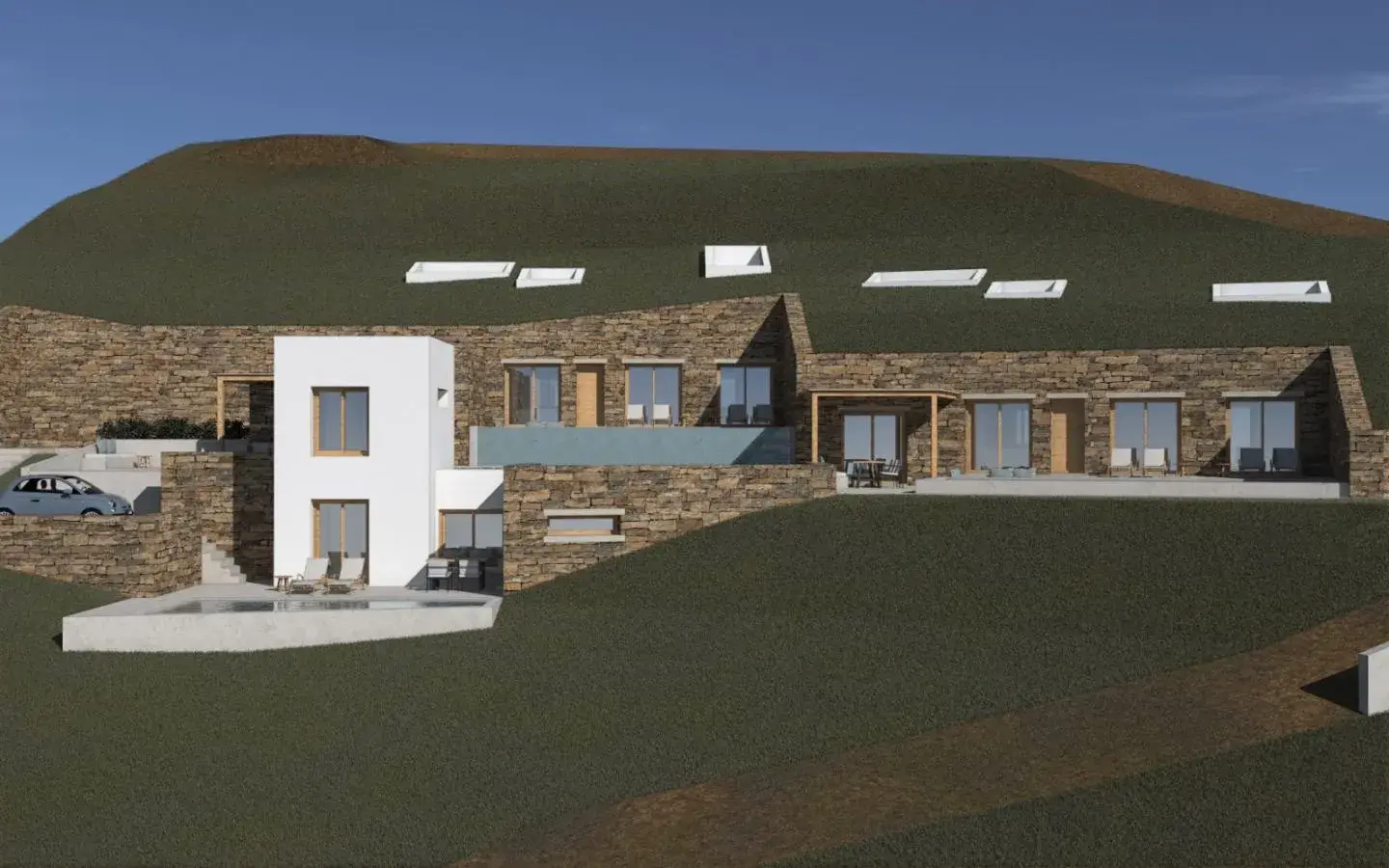
Cave houses, known in Greek as ypoferskafa or underground homes, are residences built into the natural slope of the land, with only one visible facade. Long associated with Santorini, they are now among the most sought-after home types across the Cyclades, and Naxos in particular. At Vernikos Constructions we design and build modern cave houses in Naxos, and this guide covers what makes them special, what they cost, and what to watch for if you are thinking of buying or building one.
What exactly is a Greek cave house
Under Greek building law, an underground (hyposkafo) building is one constructed below the natural ground level, showing only a single visible face. Unlike a basement, a cave house contains fully habitable living spaces: bedrooms, kitchens and living rooms with natural light and ventilation through the open facade, which almost always frames the sea view. The rest of the home sits within the hillside, wrapped in earth.
Why cave houses work so well in the Cyclades
Earth is a superb natural insulator. A well-built cave house stays cool through the Aegean summer and warm in winter, with noticeably lower energy costs than a conventional home. It is naturally protected from the strong island winds, offers excellent sound insulation, and blends into the landscape instead of competing with it. Greek planning rules also treat underground buildings favourably because of their minimal visual footprint, which on islands with strict building restrictions can mean more usable space on the same plot.
Building quality: what separates a great cave house from a problem
Two things must be engineered correctly from day one: waterproofing and daylight. The concrete shell needs full waterproofing and perimeter drainage, because moisture problems in an underground structure are very difficult to fix later. Natural light is solved through the orientation of the open facade, internal courtyards and light wells, planned together with the architectural design. This is why choosing a builder with real cave house experience matters more here than in any conventional project.
What does a cave house in Greece cost
Excavation, reinforced concrete and waterproofing push costs up; simpler facades and fewer external finishes bring them down. In practice, building a quality cave house in the Cyclades costs about the same as a high-specification conventional villa, sometimes slightly more, and repays the difference through energy performance and the planning advantages of underground construction. Location, ground conditions and access to the plot all affect the final figure. For a specific estimate on your plot in Naxos, get in touch with our team.
Our cave house projects in Naxos
In Kastraki, on the west coast of Naxos, we have delivered luxury cave houses that pair traditional Cycladic forms with modern construction and full waterproofing, just 140 meters from the sea. See our Cave House project, and browse our current properties for sale in Naxos, which include cave-style residences.
Frequently asked questions
Can a foreigner buy a cave house in Greece?
Yes. Foreigners of any nationality can buy property in Greece. Non-EU buyers need a Greek tax number (AFM) and typically use a local lawyer for title checks; buying does not by itself grant residency.
Are cave houses damp or dark?
Not when properly built. Modern cave houses use full shell waterproofing and perimeter drainage, and their open facade, courtyards and light wells bring in generous natural light.
Do cave houses cost more than normal houses?
They cost about the same as a quality conventional villa, sometimes slightly more, and typically run on much lower energy bills thanks to the earth’s natural insulation.
Which is better for a cave house, Santorini or Naxos?
Santorini made them famous, but plots there are scarce and expensive. Naxos offers the same Cycladic landscape and building tradition at more accessible prices, with a year-round local community, and it currently sits in the lower investment tier of Greece’s Golden Visa program.